Most websites don’t hand you an RSS feed anymore. They want you in their app, subscribed to their newsletter, clicking through their homepage. The feed — if it ever existed — is either hidden three layers deep in the source code, broken, or gone entirely.
That’s the situation Karim ran into last year. He was building a content monitoring dashboard for a mid-sized media agency. Twelve news sites to track, updating throughout the day. His first instinct was reasonable: find the RSS feed for each site, poll them every hour, done. Six of the twelve had no RSS feed at all. Three had feeds that hadn’t been updated since 2021. Two had feeds that appeared in the HTML but returned a 404 when you actually tried to fetch them.
The problem wasn’t that RSS is dead. It’s that expecting every page to provide a reliable, current RSS feed in 2026 is about as optimistic as expecting every restaurant to have a working website. Some do. Many don’t. And the ones that don’t aren’t going to add one for you.
This tutorial covers five methods for converting a web page to RSS, ranked by reliability — and walks through when it makes more sense to skip the whole approach and pull from a content API instead.
- What does “page to RSS” mean?
- Why the obvious approach rarely works
- Method 1: Check for a native RSS feed first
- Method 2: Use a page-to-RSS conversion service
- Method 3: Build a custom scraper with RSS output
- Method 4: Use an RSS aggregator with page monitoring
- Method 5: Skip the feed, use a content API instead
- When page to RSS still makes sense
- Getting started with LumenFeed
- FAQ
What Does “Page to RSS” Mean?
Converting a page to RSS means taking a web page that publishes content — news articles, blog posts, product updates, job listings — and generating an RSS feed from it so you can track new content programmatically. The result is an XML feed you can subscribe to in an RSS reader or poll with code.
For developers, RSS is attractive because it’s pull-based and structured. Instead of scraping the raw HTML of a page every time you want to check for updates, you get a clean data format with titles, descriptions, publication dates, and source links — exactly what you need to feed into a dashboard, newsletter tool, or data pipeline. The RSS 2.0 specification has been stable since 2002, which is part of why so many tools still support it.
Why the Obvious Approach Rarely Works
The first thing most developers do is check for a native RSS feed: look for the orange RSS icon, inspect the page source for a link rel=”alternate” type=”application/rss+xml” tag, or try appending /feed or /rss to the domain. For major CMS platforms like WordPress or Substack, this works reliably. For everything else, it’s a coin flip.
The deeper issue is that websites which don’t publish RSS feeds usually don’t maintain them either. A broken feed is worse than no feed — your pipeline ingests stale data and your monitoring fails silently. And even working feeds vary wildly in what they include: some strip the full article body and give you a 50-word excerpt, some exclude images, some use non-standard date formats that break your parser.
That said, native detection should always be your first step — it’s free and takes 30 seconds. Here’s the method comparison at a glance:
| Method | Setup time | Reliability | Maintenance | Best for |
|---|---|---|---|---|
| Native RSS check | 30 seconds | High (if feed exists) | None | First check, always |
| Conversion service | 2–5 minutes | Medium | Low (until site redesigns) | Personal projects, prototyping |
| Custom scraper | Hours | High (you control it) | High | Niche sources you own |
| RSS aggregator | 5–10 minutes | Medium | Low | Non-technical teams, UI workflows |
| Content API | Minutes (one API key) | Very high | None | Multi-source, production pipelines |
Method 1: Check for a Native RSS Feed First
Before reaching for any tool, spend 60 seconds on manual detection. Open the page, right-click → View Page Source, and search for “rss” or “atom”. You’re looking for something like:
If you find it, copy that href value and verify it actually loads — paste it into your browser. Valid RSS returns XML starting with <rss version=”2.0″> or <feed xmlns=”http://www.w3.org/2005/Atom”>. If it 404s, treat the site as feed-less and move on.
A few platform-specific shortcuts worth knowing: WordPress sites almost always have a feed at /feed/. Medium publications append /feed. YouTube channels use https://www.youtube.com/feeds/videos.xml?channel_id=CHANNEL_ID. The 30-second native check prevents you from spinning up a conversion tool for a feed that already exists.
Method 2: Use a Page-to-RSS Conversion Service
Several services can auto-generate an RSS feed from any URL. The most established ones analyze page structure and extract content blocks automatically — no code required on your end.
RSS.app — paste a URL, it analyzes the page structure and generates a feed. Works well for news sites and blogs. Free tier covers 5 feeds. FetchRSS offers a CSS selector-based builder for custom extraction rules when auto-detection misses the right elements. Feedity provides a visual picker to select content blocks, useful when a site’s layout is non-standard.
These services are fast to set up. The trade-off: they depend on the third-party service staying online and maintaining their scraping logic as target sites update layouts. When a site redesigns, your generated feed breaks — and you often find out when your monitoring dashboard goes quiet, not when the break happens.
Conversion service
Setup: 5 minutes. Works until the target site redesigns. Fails silently. No code ownership. Third-party dependency.
Best fit
One-off monitoring tasks, personal projects, quick prototypes where maintenance burden doesn’t matter.
Method 3: Build a Custom Scraper with RSS Output
For sources that matter and won’t cooperate with automated tools, write your own scraper and format the output as RSS XML. This gives you full control over what gets extracted and how it’s structured.
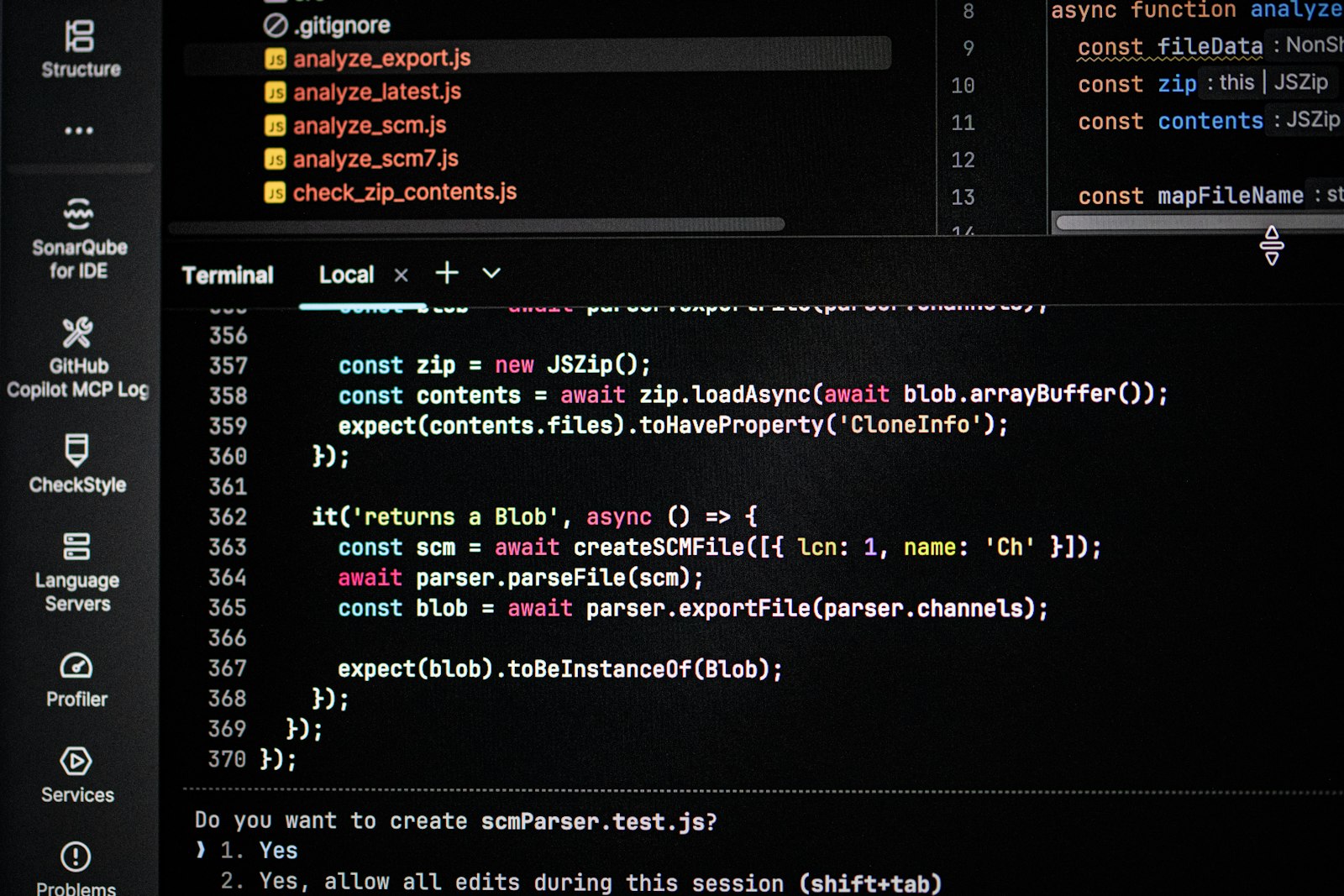
Here’s a minimal Python example using requests, BeautifulSoup, and feedgen:
from bs4 import BeautifulSoup
from feedgen.feed import FeedGenerator
from datetime import datetime, timezone
URL = “https://example-news-site.com/articles”
def scrape_to_rss(url):
response = requests.get(url, headers={“User-Agent”: “Mozilla/5.0”})
soup = BeautifulSoup(response.text, “html.parser”)
fg = FeedGenerator()
fg.title(“Example Site Articles”)
fg.link(href=url)
fg.description(“Auto-generated RSS from example-news-site.com”)
for article in soup.select(“article.post-card”):
title = article.select_one(“h2”).text.strip()
link = article.select_one(“a”)[“href”]
fe = fg.add_entry()
fe.title(title)
fe.link(href=link)
fe.published(datetime.now(timezone.utc))
return fg.rss_str(pretty=True)
print(scrape_to_rss(URL))
Install the dependencies with pip install requests beautifulsoup4 feedgen. Update the soup.select() selector to match the actual HTML structure of your target site.
This approach is the most durable long-term — you own the extraction logic and can update CSS selectors when the site changes. The cost: maintenance time whenever targets update their templates, plus the need to handle rate limiting, rotating user agents, and JavaScript-rendered pages (which requests can’t handle — those require Playwright or Selenium).
Method 4: Use an RSS Aggregator with Page Monitoring Built In
Tools like Inoreader, Feedly, and NewsBlur have page-monitoring features that track any URL for changes without requiring a native feed. They use internal scrapers and surface updates in a standard feed interface.
This is the right answer for non-technical users, or for teams that want a UI-based monitoring workflow. Inoreader’s “Web Clips” feature, for example, lets you define a CSS selector and track specific elements on any page — you get a feed URL you can plug into downstream tools.
The ceiling: integration flexibility. You can subscribe and read. Getting that data into a custom pipeline, enriching it with sentiment scores, or querying it programmatically requires APIs that these tools either don’t offer or charge significant enterprise rates for.
Method 5: Skip the Feed, Use a Content API Instead
This is the option that doesn’t get mentioned often enough — because it requires reframing the question. If your goal isn’t “get RSS from this specific page” but “reliably track new content across many sources,” a news content API solves the problem without the feed maintenance overhead.
Instead of converting 20 individual pages to RSS and managing 20 separate feed parsers, you make one API call and get structured JSON back — with titles, full content, publication dates, keywords, sentiment scores, and source links already extracted.
LumenFeed is a content aggregation API that indexes articles, blog posts, podcasts, and video content from 100,000+ sources in 20+ languages. One endpoint, structured JSON, no parsing required:
curl -X GET “https://api.lumenfeed.com/api/v1/articles?q=artificial%20intelligence&sort_by=date_desc&per_page=20” \
-H “X-API-Key: YOUR_API_KEY”
The response includes everything you’d need to build a monitoring dashboard, newsletter, or AI pipeline — without touching a single RSS file:
“articles”: [
{
“title”: “OpenAI Releases New Reasoning Model”,
“content_excerpt”: “OpenAI has released…”,
“author”: “Jane Smith”,
“source_link”: “https://techcrunch.com/…”,
“published_at”: “2026-08-07T14:32:00Z”,
“sentiment_label”: “positive”,
“sentiment_score”: 0.74,
“has_video”: false,
“keywords”: [“openai”, “llm”, “reasoning”],
“language”: “en”,
“country”: “us”
}
]
}
No page conversion. No feed maintenance. No broken parsers when a target site redesigns.
Page-to-RSS approach
One feed per source. Manual discovery. Parsers break on site redesigns. No enrichment — you get raw text and a link.
Content API approach
One API call for 100,000+ sources. Structured JSON with sentiment, keywords, and language data. Never breaks on layout changes.
The API approach works best when your content requirements span multiple sources, when you need enriched data like sentiment or keyword extraction, or when you’re building something in production and can’t afford silent pipeline failures.
When the Page-to-RSS Approach Still Makes Sense
To be fair: there are real scenarios where converting a specific page to RSS is the right call.
- You’re tracking a source not in any content API. A niche forum, an internal wiki, a competitor’s changelog — these won’t show up in commercial news APIs. Custom scraping is the only path.
- Your content requirement is hyper-specific. You want posts from one particular author tag on one site, with a filter no API supports. Build the scraper, own the extraction logic.
- Your downstream consumer is an RSS reader. If you’re feeding Feedly or a personal reader, you need an actual feed URL — a JSON API doesn’t help there.
For anything involving 5+ sources, production-grade reliability, or enriched content metadata, the API route is faster to build and cheaper to maintain over time. That said, “convert page to RSS” is a perfectly valid tool in the kit for the right job.
Getting Started with LumenFeed
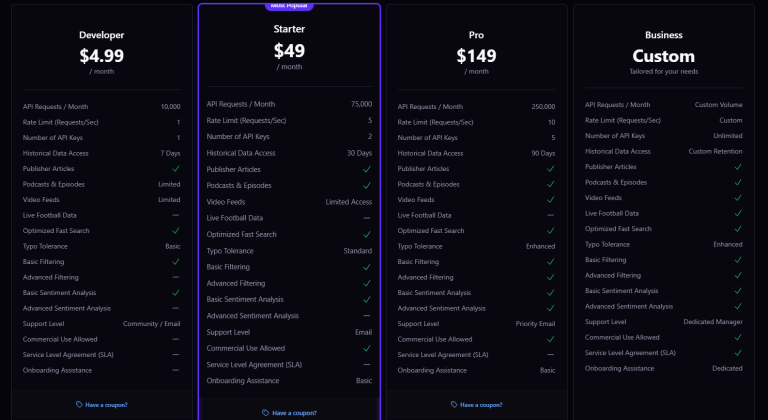
LumenFeed’s Developer plan starts at $4.99/month — 10,000 requests, 1 req/s, no credit card required to start. Starter is $49/month (75,000 requests, 5 req/s, 30 days history), Pro is $149/month (250,000 requests, 10 req/s, 90 days history). All plans include commercial use. Full documentation at lumenfeed.com.
Frequently Asked Questions
How do I convert a page to RSS without any coding?
Use a service like RSS.app or FetchRSS. Paste the URL, let the tool analyze the page structure, and copy the generated feed URL. No code required — though generated feeds can break if the target site updates its layout.
What is the difference between page to RSS and web scraping?
Web scraping extracts arbitrary data from HTML. Converting a page to RSS is a specific type of scraping that formats the output as RSS XML — a standardized feed format with fields like title, description, link, and pubDate. The RSS format makes the content compatible with any feed reader or automation tool that accepts RSS.
Can I convert a JavaScript-rendered page to RSS?
Most conversion services and the basic requests+BeautifulSoup scraper approach can’t handle JavaScript-rendered pages. You’d need a headless browser like Playwright or Puppeteer for those. Alternatively, a news API like LumenFeed handles JavaScript rendering server-side — you get structured data back without touching the browser layer.
What does an RSS feed URL look like?
An RSS feed is an XML file served at a URL. A typical RSS feed URL looks like https://example.com/feed/ or https://example.com/rss.xml. The file contains a channel element with item children, each with a title, link, description, and pubDate field as defined by the RSS 2.0 spec.
Why don’t most websites have RSS feeds anymore?
Most content platforms shifted to algorithmic feeds and app-based consumption through the 2010s. RSS provides content portability — readers can subscribe without using the platform’s interface, which reduces the ad impressions and engagement signals the platform controls. It’s not technically difficult to generate a feed; it’s usually a deliberate product decision not to.
How often should I poll an RSS feed or page-to-RSS endpoint?
Every 15–60 minutes is standard for personal use. For production pipelines, poll no more frequently than the content is likely to update, and cache the last-fetched etag or Last-Modified header to avoid unnecessary bandwidth. Aggressive polling every minute irritates server owners and may get your IP rate-limited.
How do I convert a page to RSS in Python?
The standard approach is requests to fetch the HTML, BeautifulSoup to parse it, and feedgen to generate valid RSS XML output. See Method 3 in this article for a working starter example. For JavaScript-heavy pages, replace requests with Playwright’s sync API.
Is converting a page to RSS legally allowed?
It depends on the site’s terms of service. Most public pages allow read access, but scraping for commercial redistribution often violates ToS. Check the site’s robots.txt and terms before building a production scraper. Content APIs like LumenFeed handle licensing and terms compliance for all the sources they index.